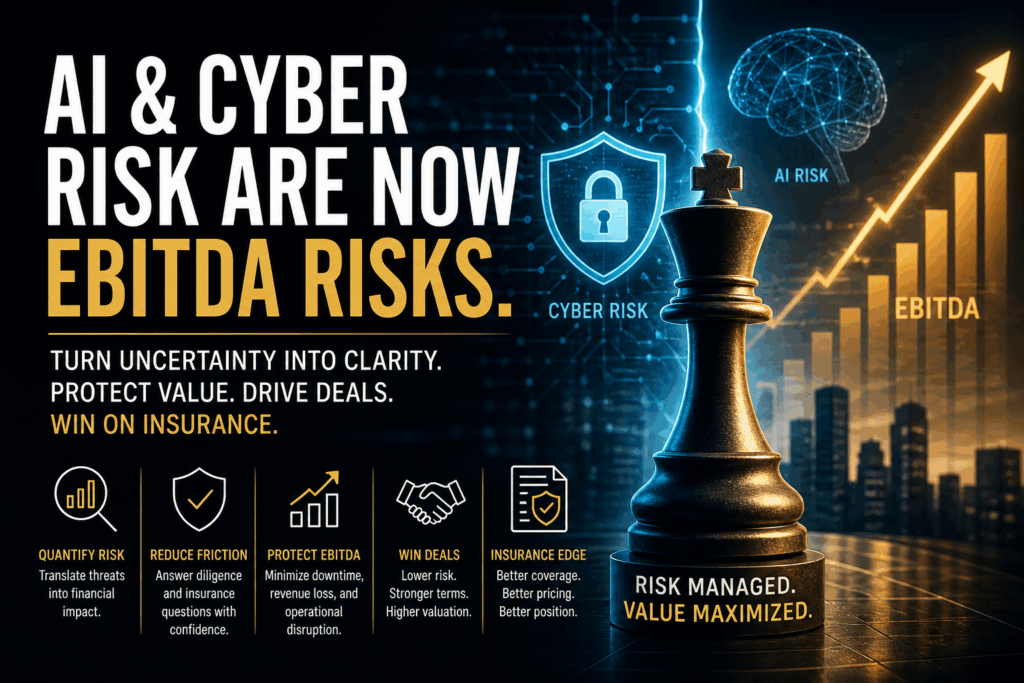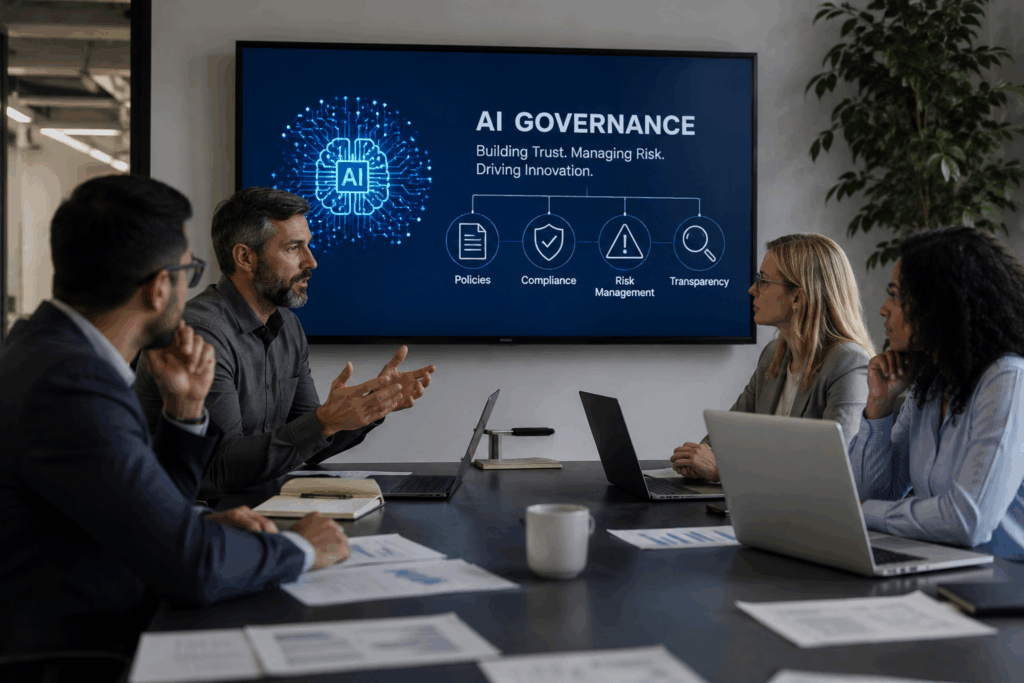
Artificial intelligence has quickly become one of the most talked-about technologies in modern business. It seems that every week there is a new AI platform, a new use case, or a new headline about how organizations are using AI to improve efficiency, reduce costs, and increase productivity. From generating content and analyzing data to automating workflows and enhancing customer service, AI is transforming the way businesses operate.
For many organizations, the excitement around AI is justified. The technology offers tremendous opportunities to work smarter, move faster, and gain a competitive advantage. However, while many companies are focused on what AI can do for their business, far fewer are asking an equally important question: How do we ensure AI is being used safely, responsibly, and in a way that aligns with our business objectives?
The reality is that AI adoption is happening faster than most organizations can govern it. Employees are discovering and using AI tools on their own, often without formal approval, oversight, or training. While these tools may increase productivity in the short term, they can also introduce significant security, compliance, operational, and reputational risks. As AI continues to become embedded in daily business processes, organizations must recognize that AI governance is no longer optional. It is becoming a business necessity.
The Rapid Rise of AI in the Workplace
Only a few years ago, artificial intelligence was viewed as a technology primarily used by large enterprises and technology companies. Today, AI tools are accessible to anyone with an internet connection. Employees across every department can leverage AI to draft emails, create presentations, summarize meetings, write software code, analyze spreadsheets, generate marketing content, and perform countless other tasks.
In many organizations, this adoption is happening organically. Employees are finding tools that help them complete tasks more efficiently and are incorporating them into their daily workflows without waiting for formal approval. While this may seem harmless, it often creates a disconnect between how employees are using AI and what leadership believes is occurring within the organization.
Many executives assume their organization is still evaluating AI adoption when, in reality, AI has already become part of everyday operations. This gap in visibility creates risk because organizations cannot manage what they do not know exists.
Understanding the Risks of Uncontrolled AI Use
The risks associated with AI are often misunderstood. Many people assume the primary concern is that AI will make mistakes or provide inaccurate information. While that is certainly a concern, the risks extend much further.
One of the most immediate threats involves data exposure. Employees may unknowingly enter sensitive information into public AI platforms while attempting to complete routine tasks. Customer information, financial data, intellectual property, strategic plans, proprietary code, and confidential business communications can all be exposed when employees fail to understand how AI systems process and store information.
Consider a simple example. An employee uses an AI chatbot to help draft a client proposal. To provide context, they upload confidential customer information, pricing details, and internal business data. The employee may view this as an efficient use of technology. However, from a governance perspective, the organization has potentially exposed sensitive information to a third-party system without understanding how that data is being handled, stored, or used.
Beyond data exposure, organizations must also consider the risk of inaccurate outputs. AI systems are designed to generate responses based on patterns and probabilities, not necessarily facts. As a result, AI can produce information that appears credible but is incorrect. If employees rely on AI-generated content without proper review, organizations may make poor business decisions, communicate inaccurate information to customers, or create compliance concerns.
There are also legal and regulatory implications. As governments and regulatory bodies continue to evaluate AI, organizations must be prepared to demonstrate that they are using these technologies responsibly. Industries that handle sensitive information, including healthcare, financial services, legal services, government contracting, and critical infrastructure sectors, face increased scrutiny regarding how AI is deployed and monitored.
Why AI Governance Matters
When many business leaders hear the term “governance,” they assume it means additional bureaucracy or restrictions. In reality, effective governance is designed to enable innovation, not prevent it.
AI governance is the framework that helps organizations balance opportunity with risk. It establishes the policies, procedures, roles, responsibilities, and controls necessary to ensure AI is used in a manner that supports business goals while protecting the organization from unnecessary exposure.
Think of AI governance as the guardrails along a highway. The purpose of guardrails is not to slow traffic down. Their purpose is to keep vehicles safely on the road. In the same way, AI governance allows organizations to embrace innovation while reducing the likelihood of costly mistakes.
Without governance, employees are left to make their own decisions regarding acceptable AI use. Different departments may adopt different tools, apply different standards, and expose the organization to inconsistent levels of risk. Governance creates consistency, accountability, and visibility across the enterprise.
The Business Case for AI Governance
Organizations often approach governance from a risk reduction perspective, but there are significant business benefits as well.
Companies that establish AI governance programs tend to adopt new technologies more confidently because they have a clear framework for evaluating and managing risk. Employees understand what tools are approved, what data can be used, and what safeguards must be followed. This reduces uncertainty and allows teams to focus on innovation rather than guessing what is permissible.
AI governance also helps build trust with customers, business partners, regulators, and stakeholders. Organizations that can demonstrate responsible AI practices are increasingly viewed as lower-risk and more trustworthy. As customers become more aware of data privacy and AI-related concerns, trust will become an increasingly important competitive advantage.
Furthermore, governance improves decision-making. When organizations establish oversight processes, they gain visibility into how AI is being used across the business. This visibility allows leadership to identify opportunities, address risks, allocate resources effectively, and make informed strategic decisions.
Key Components of an Effective AI Governance Program
While every organization is different, most successful AI governance programs share several common elements.
The first component is policy development. Organizations should clearly define what constitutes acceptable AI use and what activities are prohibited. Employees need practical guidance regarding which tools are approved, what data may be entered into AI systems, and when additional approvals are required.
The second component is risk assessment. Not all AI tools carry the same level of risk. Organizations should evaluate AI solutions based on factors such as data sensitivity, regulatory requirements, third-party involvement, and potential business impact.
Training and awareness are equally important. Employees are often the first line of defense when it comes to responsible AI use. Regular training helps ensure employees understand both the benefits and risks associated with AI technologies.
Governance also requires accountability. Organizations should identify individuals or teams responsible for overseeing AI initiatives, reviewing new technologies, monitoring compliance, and responding to emerging risks.
Finally, governance must be an ongoing process. AI technology is evolving rapidly, and governance programs must evolve alongside it. Regular reviews, policy updates, and risk assessments help ensure controls remain effective as the technology landscape changes.
Questions Every Executive Team Should Be Asking
As AI adoption accelerates, leadership teams should begin evaluating their organization’s readiness.
Do we know what AI tools employees are currently using?
Have we established clear policies governing AI use?
Are employees trained on the risks associated with AI?
Do we understand what sensitive information is being shared with AI systems?
Who is responsible for approving and monitoring AI initiatives?
How do we evaluate new AI tools before they are deployed?
What regulatory or compliance requirements apply to our use of AI?
If these questions cannot be answered with confidence, there is a strong possibility that AI-related risks already exist within the organization.
Looking Ahead
The conversation around artificial intelligence is no longer focused on whether businesses should adopt AI. That question has largely been answered. Organizations across every industry are already leveraging AI in some capacity and adoption will continue to increase in the years ahead.
The more important question is whether organizations are prepared to govern AI effectively.
Businesses that establish governance programs today will be better positioned to take advantage of AI opportunities tomorrow. They will be able to innovate faster, reduce risk, maintain customer trust, and demonstrate accountability to regulators and stakeholders. More importantly, they will create a foundation that allows AI to become a sustainable business advantage rather than a source of uncertainty.
Artificial intelligence represents one of the most significant technological shifts of our generation. Like any transformative technology, it offers both opportunity and risk. Organizations that recognize this reality and implement appropriate guardrails will be the ones that maximize the benefits while minimizing the consequences.
At Triad InfoSec, we believe responsible AI adoption begins with governance. By establishing clear policies, accountability structures, risk management processes, and employee awareness programs, organizations can confidently embrace innovation while protecting what matters most. The future of AI is already here. The question is whether your organization has the guardrails in place to navigate it safely.