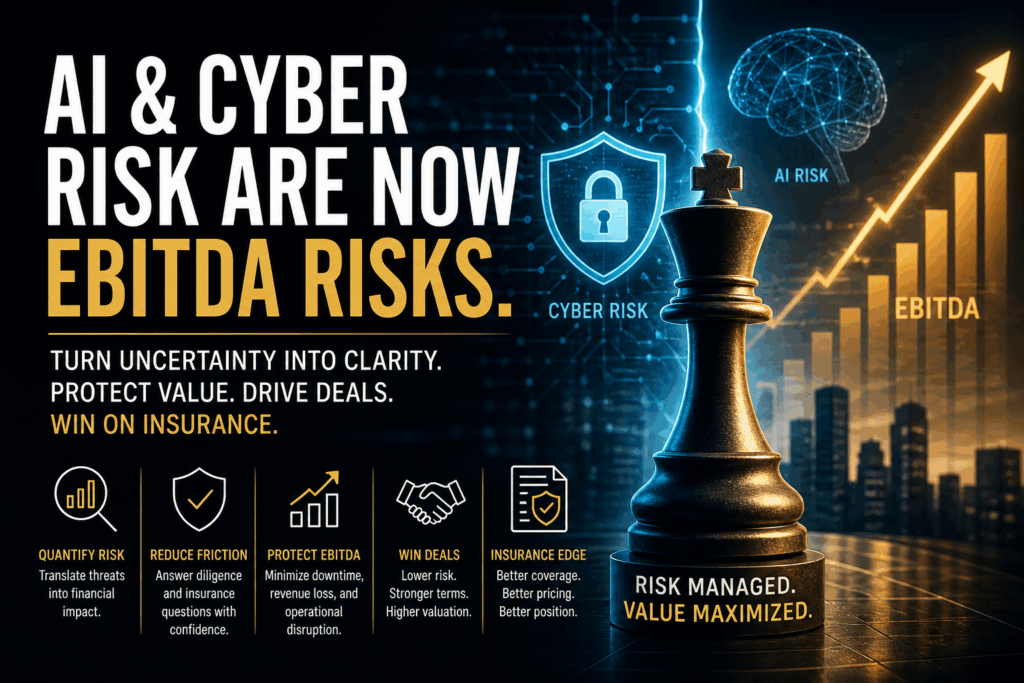
Your clients are already using AI. Not next quarter. Not “once we finish planning.” It’s happening right now, across your client base, usually without a formal rollout or approval process. Employees are using ChatGPT to draft emails and policies. Teams are leaning on Copilot to summarize meetings and build first drafts. AI note-takers are being turned on in conference rooms. Workflow automation tools are being added to speed up reporting and routine tasks. The question is no longer whether businesses will adopt AI. The question is whether your firm has a plan for AI governance for MSPs and real client accountability when things go wrong.
Because when AI causes a mess, the blame doesn’t stop at the end user. It often lands on the provider. Your clients are already using AI, you can manage the risk or get blamed.
Why AI Governance for MSPs Matters Now
In the past, many clients viewed their MSP as the team that kept systems running. Today, that expectation has shifted. More and more, clients want their provider to advise on technology risk, not just support tickets. They assume you are thinking ahead about security, compliance, and operational exposure. That is exactly why AI governance for MSPs matters now. If AI use leads to a privacy complaint, a contract problem, a policy violation, or an audit question, your client’s first call is often to you. Even if you never approved the tool, they still expect you to explain what happened and what needs to change.
Without clear AI governance, providers end up in the blame path. The client may say, “We didn’t know,” but the unspoken follow-up is, “Shouldn’t you have known?”
The Growing Need for AI Risk Management for MSPs
A lot of AI risk is not coming from big, formal projects. It comes from normal behavior. People paste company data into AI tools to save time. They upload spreadsheets to get quick summaries. They ask AI to rewrite client emails or generate reports. They copy results into proposals and decisions without a second set of eyes. Leadership pushes adoption for speed before anyone sets internal standards. All of this adds up to real AI security risk for clients, and it is why AI risk management for MSPs is becoming a service need, not just a talking point.
When AI is used without guardrails, it can create problems like data leakage, inaccurate outputs being treated as fact, and unclear ownership of decisions. This is where unmanaged usage turns into “Who approved this?” and “Why didn’t we have a policy?” conversations. And those conversations rarely stay calm for long.
Why AI Compliance for MSSPs Is Becoming a Revenue Opportunity
For security-focused providers, this is also a growth moment. AI use can create exposure tied to privacy rules, documentation requirements, access controls, and industry standards. When clients are in regulated spaces, “We used AI because it was fast” is not a defense anyone wants to test during an audit. That is where AI compliance for MSSPs becomes a practical way to expand advisory value.
Many organizations already trust their MSSP for security oversight. That makes MSSP AI governance a natural extension of what you are already doing. If you can help clients set policy, track usage, reduce risk, and document decisions, you are not just selling security tools. You are selling confidence and defensibility. That is a real differentiator in managed service provider AI compliance conversations.
What Clients Actually Need: Policy, Oversight, and Accountability
Most clients don’t need a lecture on AI. They need structure they can follow. In plain terms, clients want three things: policy, oversight, and accountability.
First, they need clear AI usage policies. This includes what tools are approved, what tools are not approved, and what data is restricted. It also includes who is responsible for approval and oversight. Without this, every employee makes their own “policy” on the fly, and risk spreads fast. A strong AI usage policy for businesses is one of the simplest ways to reduce confusion and limit exposure.
Second, they need risk visibility. Where is AI already in use? Which departments are using it the most? What are the biggest security and compliance gaps? What needs immediate control? You cannot fix what you cannot see, and most clients have no idea how much AI usage is already happening inside their walls.
Third, they need strategic guidance. Clients want the speed of AI, but they also want to avoid unmanaged risk. They need help adopting AI in a way that makes sense for their business and can be explained later to auditors, customers, and internal leaders. This is where an AI governance policy pack becomes useful. It gives the client a ready-to-use starting point: rules, decision paths, documentation, and accountability. Instead of starting from zero, you help them formalize the process in a way people will actually follow.
How IT Providers Can Package AI Governance Into Services
Here’s where many IT firms miss the opportunity. They talk about AI risk, but they don’t package a clear response. Clients will pay for clarity and structure, especially when they feel exposed. The firms winning are not just talking about AI risk, they are packaging it.
If you want to turn client concern into structured service delivery, build offers around visibility, documentation, and ongoing guidance. Common service lines that fit naturally here include compliance accelerators for MSPs, Security Relationship Manager services, co-managed vCISO services, MSSP resell with Cyberleaf, AI governance policy packs, and AI QBR add-ons. If you are building an AI policy for IT companies, this is also where you define what your firm will and will not support, so you are not taking on surprise liability.
When your offers are packaged, the client doesn’t have to “invent” the project. They can just choose a service and move forward.
The Role of Co-Managed vCISO Services in AI Oversight
Many clients need leadership-level guidance, but they cannot justify hiring a full-time security executive. This is one reason co-managed vCISO services are growing. They bridge the gap between technical operations and governance strategy. They help translate “Here’s what the team is doing” into “Here’s how we control risk and document decisions.”
For AI, this creates a natural entry point for ongoing oversight. A vCISO-style advisory layer can help enforce policy, guide approvals, and run regular risk reviews without turning AI into a blocked initiative. When done well, it supports responsible adoption while protecting the client and your firm.
Turning Quarterly Reviews Into Strategic AI Conversations
Standard reviews are no longer enough. QBRs used to be about performance, tickets, and projects. Now they need to include risk, compliance, and exposure. Adding AI risk discussions to QBRs helps providers stay ahead of problems instead of reacting after something breaks. An AI QBR add-on turns a routine meeting into a structured conversation about what AI tools are being used, what data is being touched, and what gaps need to be closed.
This approach builds trust because you are not showing up only when there is an incident. It also creates a clear path for upsells that feel earned, not forced. Over time, that improves retention and positions you as the team that leads, not the team that just fixes.
AI Governance Consulting as a Practical Next Step
Most clients do not need theory. They need a practical plan. That is why AI governance consulting is becoming a real next step for MSPs, MSSPs, and IT providers. Good consulting in this space helps a client document current usage, reduce exposure, and assign responsibility. It also supports cybersecurity advisory for AI adoption, because many AI problems are really security and process problems in disguise.
This is not about slowing the business down. It is about making AI adoption safer and easier to defend. When a regulator, auditor, customer, or board member asks, “How do you control AI use?” your client should have a clean answer.
Why Waiting Creates More Risk for Everyone
Waiting does not keep AI out of the business. It only keeps it undocumented. The longer you wait, the more unapproved tools show up. The more undocumented usage spreads across teams. The more compliance exposure builds quietly. And the more pressure lands on the provider once something goes wrong.
Delayed action increases risk, weakens trust, and makes cleanup more expensive. It also makes your firm look reactive, even if you have been doing good work. If you want to protect the relationship, you need to lead the conversation before the client is forced into it.
Manage the Risk or Get Blamed
Your clients are already using AI. They need structure, policy, and oversight now, not later. Providers who lead with AI governance for MSPs, AI risk management for MSPs, and AI compliance for MSSPs will be better positioned to protect clients and grow revenue. This is also how you strengthen your role as a trusted advisor, not just a helpdesk. Your clients are already using AI. You can lead the conversation now, or you can get pulled into it later under pressure. You can manage the risk or get blamed.
If you need help turning AI risk into a service your team can actually sell, start with an AI governance policy pack your clients already need.